

Product Design as Brand Communication
A user opens your product for the first time. Before they read a word, they’ve already made a judgment.
Not about features. Not about pricing. About who you are.
That’s the quiet truth most teams miss: your product isn’t just a tool, it’s your loudest brand message. And every interaction either reinforces that message or quietly breaks it.
The Product Is the Brand’s First Real Conversation
Marketing introduces your brand. Your product proves it.
For many users, the product is the first place expectations meet reality. If your messaging says “simple,” but your interface feels cluttered, users don’t debate it; they leave.
Research supports this. According to Google, users form an opinion about a digital product in just 50 milliseconds.
Where brand promises break
- A “premium” brand with clunky onboarding
- A “fast” product with slow load times
- A “human” brand with robotic UX
Nielsen Norman Group emphasizes that users rely on immediate visual and interaction cues to judge credibility.
Don Norman, a pioneer in UX, argues that emotional design is not decorative; it directly affects usability and perception.
When product experience and brand story don’t align, users trust the experience, not the story.
Every Design Decision Is a Brand Decision
Design is often treated as a usability layer. In reality, it’s a communication system.
Every element, layout, motion, language, speed, signals something about your brand.
Examples of silent brand signals
- Spacing and layout: Structured vs expressive
- Microcopy tone: Formal vs conversational
- Interaction speed: Efficient vs thoughtful
- Error handling: Cold vs empathetic
What this means in practice
A fintech app that uses calm colors, clear language, and predictable flows communicates trust.
The same app with aggressive animations and vague messaging communicates risk, even if the backend is secure.
Apple as a Case Study
Apple’s product ecosystem consistently reflects its brand promise of simplicity and elegance. From packaging to interface design, every interaction is tightly controlled. This consistency is a key driver of its customer loyalty rate, which exceeds 90% in many markets.
IDEO highlights that design is “how it works, not how it looks”, emphasizing behavior as brand communication.
Users don’t separate “design” from “brand.” To them, it’s the same thing.
From User-Centered Design to Brand-Led Product Design
Most teams focus on User-Centered Design, building around user needs.
That’s necessary. But it’s not enough.
If everyone is optimizing for usability, products start to feel the same. Functional, but forgettable.
What is brand-led product design?
Brand-led product design builds on usability by asking a second question:
What should this experience feel like, specifically for our brand?
The shift
- User-centered design: “Is this easy to use?”
- Brand-led product design: “Does this feel like us?”
Marty Cagan (Silicon Valley Product Group) notes that great products combine usability with “emotional resonance and brand integrity”.
Airbnb as a Case Study
Airbnb redesigned its platform not just for usability but to reflect its brand idea of “belonging.” This influenced:
- Warmer imagery
- Human-centered storytelling
- Simplified booking flows
The result: increased trust and global adoption, helping Airbnb scale to over 150 million users worldwide.
Usability gets you adoption. Brand expression earns preference.
Designing for Clarity: Making the Brand Tangible
Many teams say, “Our product doesn’t feel on-brand,” but can’t explain why.
That’s usually because the brand exists as words, not systems.
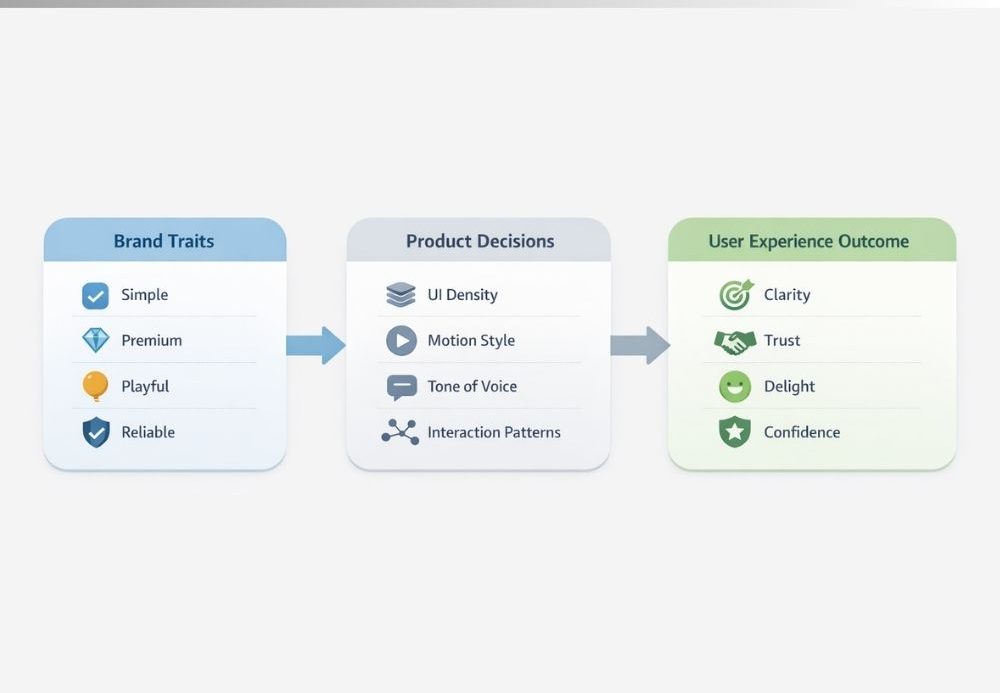
A simple translation framework
Brand Trait | Product Expression |
|---|---|
Simple | Fewer steps, clear labels, minimal UI |
Premium | Smooth transitions, refined typography |
Playful | Micro-interactions, informal language |
Reliable | Predictable flows, strong feedback systems |
According to McKinsey, companies that integrate design deeply into their business outperform industry benchmarks by 32% revenue growth and 56% total returns.
In practice
Instead of saying “our brand is simple,” you define:
- Max steps per core task
- Language rules (no jargon, no ambiguity)
- Interface density limits
If your brand can’t be translated into product behaviors, it won’t show up in your product.
Consistency Builds Trust. Consistency Builds Loyalty.
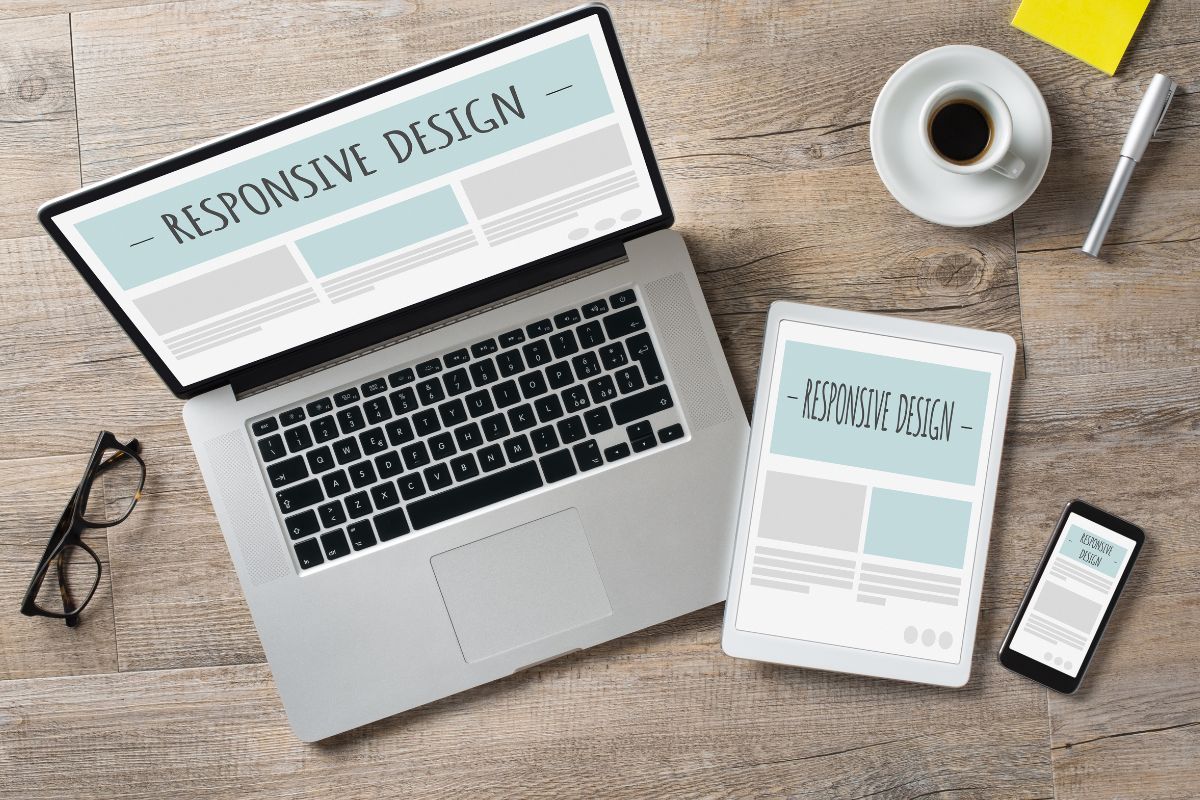
Users don’t consciously analyze your design system, but they feel consistency immediately.
According to a Lucidpress study, consistent branding can increase revenue by up to 23%.
Where consistency matters most
- Navigation patterns
- Button behaviors
- Feedback states (loading, success, errors)
- Tone of voice across screens
The compounding effect
The first time a user completes a task smoothly, it’s a relief.
The fifth time, it’s confidence.
The tenth time, it’s a habit.
Spotify as a Case Study
Spotify’s consistent UX, predictable navigation, personalized recommendations, and seamless playback reinforce its brand promise of effortless discovery. This consistency has contributed to its over 600 million active users globally.
Loyalty isn’t built through campaigns. It’s built through repeated, predictable product experiences.
The Business Impact: Adoption, Retention, and Brand Equity
This isn’t just a design conversation; it’s a business one.
When product design aligns with brand:
- Adoption improves → users understand faster
- Retention increases → experience feels consistent
- Support costs drop → fewer confusion points
- Brand equity strengthens → users remember how it feels
Harvard Business Review highlights that companies delivering strong customer experiences outperform competitors by nearly 80% in revenue growth.
What product owners often overlook
Teams invest heavily in acquisition, ads, content, and funnels.
But if the product experience breaks the brand promise, that investment leaks.
Your product is where brand value is either realized or lost.
Frequently Asked Questions
- What is product design branding?
It’s the practice of using product design decisions, UX, UI, and interactions, to express and reinforce your brand identity.
- How is brand-led product design different from user-centered design?
User-centered design focuses on usability. Brand-led product design adds emotional and identity alignment, ensuring the product feels consistent with the brand.
- Why does product design affect brand perception?
Because users experience your product directly, their perception is shaped by how it behaves, not what your marketing says.
- How can I tell if my product feels off-brand?
Look for mismatches between your brand positioning and user experience, tone, flow, speed, and interaction patterns, which are common signals.
- What’s the first step to aligning product and brand?
Translate brand traits into clear design principles and product rules your team can apply consistently.
The Bottom Line
If your product works, but doesn’t feel right, that’s a signal, not a mystery.
At Adessi, we help teams turn brand strategy into product experience systems, so what you say and what users feel finally match.
Explore how we approach Brand Strategy and Identity Design to close that gap.