

Brand Identity as a Narrative System Not a Visual One
Introduction: The End of the Million-Dollar Logo
Let’s give the golden era of graphic design its flowers.
There was a time, not that long ago, when a logo was a moat. If you hired a legendary designer like Paul Rand or Saul Bass to craft a striking visual identity, you basically won.
The competition was localized, shelf space was physical, and a bold color palette on a billboard or a cereal box was enough to burn your brand into the consumer’s brain.
In 1995, looking professional and distinct was a competitive advantage.
But then the landscape shifted. The internet created infinite shelf space. Tools like Canva, Shopify, and eventually AI generative art came along and completely democratized design.
Today, a 16-year-old in their bedroom can launch a direct-to-consumer brand that looks visually identical to a Fortune 500 company.
We have reached an era of aesthetic parity. Everyone looks good. Everyone has a clean, sans-serif font. Everyone uses high-res, minimalist photography.
When everyone looks premium, looking premium ceases to be an advantage. The modern consumer swipes past 3,000 brand messages a day, they are completely numb to pretty design. They simply care about what your brand actually offers.
This is why treating your brand identity as a purely visual exercise is a fast track to irrelevance. To survive today, your brand identity cannot just be a visual identity. It must be a narrative system.
Visual Identity vs. Narrative System: What’s the Difference?

A visual identity is your logo, typography, color palette, and photography guidelines. It answers the question: What do we look like?
A narrative system is operational. It is the visual expression, yes, but it is also your tone of voice, your customer experience, your product design, and your company behavior all tightly anchored to a central story.
It answers the question: Who are we, and how do we prove it to the world?
If you have a visual identity without a narrative system, you just have a mood board.
As we explored in the article, Brand Storytelling: How Strategic Narratives Build Brands People Trust, consumers buy into stories that reflect their own values. Your identity needs to be the physical and digital manifestation of that story. We showed this
Take Liquid Death for example. If they started with a visual identity, they would have looked at the bottled water category (blue, mountains, crisp, clean) and designed something slightly “fresher.” Instead, they started with a narrative:
We are aggressively murdering your thirst and fighting plastic waste with heavy metal energy.
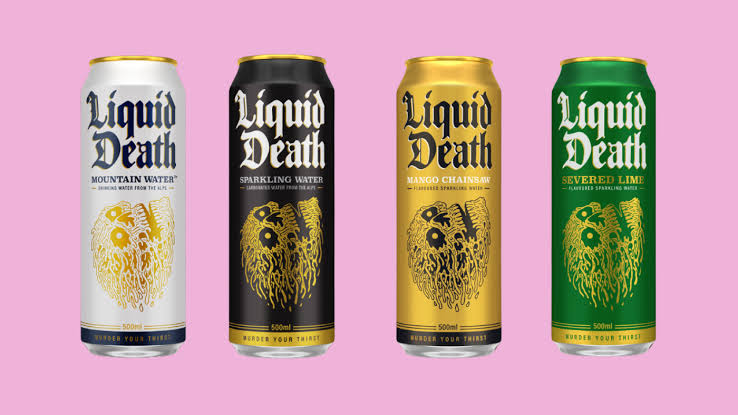
Their brand identity, the skull logo, the tallboy cans, the unhinged copywriting, the environmental activism is a complete narrative system. You cannot separate their fonts from their philosophy.
What Changed Audience Preferences?

Why did audiences suddenly demand more than just a nice logo? It changed because of the gap between what brands say and what they do.
Consumers got burned by decades of companies looking friendly and eco-conscious on the outside while operating unethically on the inside.
According to the sweeping Havas Meaningful Brands Report, 77% of brands could disappear tomorrow and consumers simply wouldn’t care.
You cannot design your way into trust. Trust is only built when a customer experiences a coherent story across every single touchpoint.
Furthermore, Ipsos research on Distinctive Brand Assets reveals a harsh reality for designers: while almost all brands invest in visual assets, only 15% of those assets are truly embedded in the consumer’s mind.
That means three-quarter of the market is entirely replaceable because they lack deeper meaning but as we covered in our related article, Strategic Narratives vs Messaging: Why Positioning Comes First, you cannot be consistent if you don’t have a foundational story to be consistent about.
How to Build an Identity That Converts

If you are gearing up for a rebrand, or building a brand from scratch, stop asking designers to show you logos. Start here instead:
- Anchor it to the Spine of the Story
Before picking colors, define the problem you are solving and the enemy you are fighting. If your narrative is about “simplifying chaos,” your visual identity and your user interface must be aggressively minimalist. The story dictates the design. - Design for Behavior, Not Just Billboards
A narrative system dictates how the brand acts. If your brand story is about “radical transparency,” that shouldn’t just be a line on your website. It should dictate your pricing page design and every other thing - Build Flexible Worlds, Not Rigid Rules Traditional brand guidelines tell you exactly how much white space goes around a logo. Narrative systems give creators a “world” to play in. When your team understands the core story, they don’t need to check a style guide every time they post a TikTok.
Summarily,
We will always love great graphic design. A brilliant logo is still a beautiful thing but a logo alone will not save you in a market where infinite choices are one click away.
Your audience is searching for meaning, alignment, and trust. If you want to capture their attention and keep their loyalty, you have to stop treating your identity like an art project, and start treating it like a storytelling engine.
Adessi builds comprehensive, narrative-driven identity systems that create market separation. Explore our Brand Identity Services today and let’s give your audience a reason to care.
Frequently Asked Questions
What is the difference between brand identity and visual identity?Visual identity refers specifically to the graphic elements of a brand (logo, colors, fonts). Brand identity is the broader narrative system, encompassing the visuals, the voice, the customer experience, and the underlying strategic story.
Why is aesthetic parity a problem for brands?
Because high-quality design tools are universally accessible, almost all modern brands look professional and attractive. Since good design is now the baseline rather than a differentiator, brands must rely on distinct narrative systems to stand out.
How does a narrative system build brand trust?
Trust requires consistency. When a brand uses a narrative system, its visual design, marketing messaging, and business actions are all aligned with one central truth. This coherence proves to the customer that the brand is authentic, rather than just putting on a marketing facade.