

Why Demographics Fail and (What to research instead)
We’ve all had that project that required a survey with the question “Age range”, “gender”, but rarely ever covers motivations. Maybe because sometimes it just feels like a lot to uncover.
McDonald’s once spent a fortune perfecting their milkshakes. They studied their target demographic; busy commuters, mostly men, early morning buyers and optimized everything. Thickness. Sweetness. Temperature. The shakes got better, but sales didn’t move.
Then someone asked a different question: Why are people buying milkshakes at 8 a.m.?
Turns out, commuters weren’t buying milkshakes because they necessarily loved milk, they were buying them because a long, boring drive required something that lasted the whole trip, kept one hand free, and didn’t make a mess.
The shake wasn’t competing with other breakfast drinks, it was competing with bananas, bagels, and boredom.

That single insight discovered by ignoring demographics entirely and studying behavior instead changed how McDonald’s marketed the products. The sales skyrocketed.
This just made it clear, demographics describe people, but they rarely explain decisions.
Two customers can share the exact same age, income, and zip code but buy for completely opposite reasons. One might obsess over sustainability, the other might just want free shipping. So your research cannot stop at demographics.
What Predicts Purchase Behavior?
If demographics answer who, behavior answers why. Behavioral audience research looks at how people interact with problems, make decisions, and justify purchases. It asks:
- What problem triggered the search?
- What alternatives did they consider?
- What made them trust one brand over another?
- What almost stopped them from buying?
This kind of market research reveals the real competition your brand faces and it’s rarely what you think. Airbnb didn’t just compete with hotels.
They competed with the cost of visiting family, the hassle of planning group trips, and the desire for unique travel experiences.

When you study behavior instead of demographics, you stop seeing customers as profiles and start seeing them as people solving specific problems. This is how to go about it:
1. The “Jobs to Be Done” Framework
One of the sharpest approaches to audience research comes from Clayton Christensen’s “Jobs to Be Done” framework.
Instead of segmenting by demographics, it asks: What job is the customer hiring this product to do?
People don’t buy noise-canceling headphones because they’re 30-year-old remote workers. They buy them because they need to block out a screaming toddler, a noisy café, or a chatty coworker during deep work. The job explains the purchase. Demographics just describe the person doing the hiring.
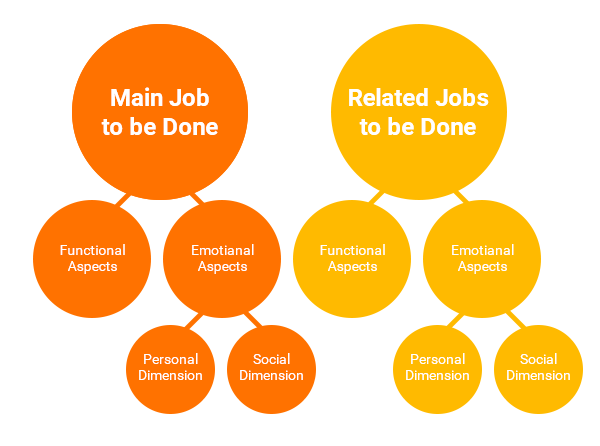
When you understand the job, you can position your brand as the best tool for that specific task not just another option in a crowded category.
2. Study the Trigger, Not Just the Transaction
Another critical layer of audience research is identifying the exact moment a customer realizes they need a solution.
This “trigger event” could be:
- Getting a new job that requires unfamiliar skills
- A product breaking at the worst possible time
- A peer recommending something that worked for them
- A life change, moving cities, having a baby, starting a business
These moments reveal when your brand becomes relevant, which is often more valuable than knowing who might buy. For example, many people start researching life insurance right after having their first child not because their demographics changed, but because their sense of responsibility did. Behavioral triggers predict purchases far better than static demographic profiles ever could.
3.Listen to How Customers Actually Talk
Paying attention to the language customers use is also one of the most underrated aspects of market research.

Read reviews. Listen to sales calls. Scroll through Reddit threads and support tickets. You’ll notice customers describe problems in ways that sound nothing like your marketing copy.
A SaaS company might call their product “an enterprise-grade collaboration platform.” Meanwhile, actual users describe it as “the thing that finally stopped our team from losing files in email threads.”
Both describe the same product. Only one sounds like something a human would say. When audience research captures authentic customer language, messaging stops sounding like marketing and starts sounding like help. That shift alone can double conversion rates.
Why This Matters for Brand Positioning?

Understanding behavior doesn’t just improve ads. It strengthens your entire brand position.
When you know why customers buy, you can define your role in their decision process with precision. Instead of targeting “busy parents,” you position as the meal kit for parents tired of hearing “I don’t like that” at dinner.
Once positioning is clear, messaging becomes obvious. (For more on how these layers connect, check out our article on Strategic Narratives vs Messaging.)
So when next you’re having a market research, focus on:
Problems people are trying to solve
Alternatives they’re considering
What else are they comparing you to, including doing nothing at all?
Trigger moments
What life event, pain point, or realization made them start looking?
Decision criteria
What factors ultimately convince them to buy (or walk away)?
Language they use
How do they describe the problem in their own words?
These dimensions create a picture of customer behavior that demographics simply can’t capture.
Frequently Asked Questions
- When should you use demographics in audience research?
Demographics work best for media buying and distribution decisions like choosing which platforms to advertise on or where to open a physical location. But they shouldn’t drive your positioning or messaging strategy.
- How does behavioral research improve conversion rates?
When you understand the real reasons people buy, your messaging addresses their actual motivations rather than assumed needs. This relevance dramatically increases conversion because you’re speaking to decisions, not demographics.
- Should customer personas be included in behavioral insights?
Absolutely. Effective personas go beyond demographics to include purchase triggers, decision criteria, common objections, and the language customers use. Without behavioral context, personas are just fictional characters that don’t predict real behavior.
In essence, demographics is necessary but it only tells you who someone is on paper, behavior tells you why they act in real life. For brands trying to grow, that’s the difference between staying small and climbing the ladder of success.
Ready to stop guessing and start understanding your customers? Work with Adessi to run a brand strategy that actually moves the needle.