

How Strong Brand Strategy Makes Performance Marketing Work Better
It’s a common scenario in modern marketing to have several departments: a “brand team” focused on colors, feelings, and awareness, and a “performance team” focused strictly on clicks, conversions, and Return on Ad Spend (ROAS). While inherently nothing is wrong with two departments, oftentimes, they barely speak the same language.
When you treat brand strategy and performance marketing as two separate, competing forces, your business suffers. The reality is much more cooperative. A robust brand strategy isn’t the enemy of performance marketing; it is the fuel that makes it work efficiently.
If you want your direct-response ads to convert at a lower cost, you need a brand that people actually recognize and trust. Here is how connecting the two leads to long-term growth.
The Problem with Performance-Only Marketing

Performance marketing is incredible for capturing existing demand. If someone is actively searching for a solution, a well-placed, highly targeted ad will capture that click.
But what happens when you exhaust that immediate pool of active buyers?
- Customer Acquisition Costs (CAC) start to skyrocket.
- Ad fatigue sets in quickly.
- You are forced into a race to the bottom, competing purely on price and discounts.
Performance marketing alone struggles to create demand. It asks for the sale without first building the relationship. As we explored in our article Brand Storytelling: How Strategic Narratives Build Brands People Trust, when you ignore the deeper motivations of your audience, your marketing always stops too early.
How Brand Strategy Lifts Performance
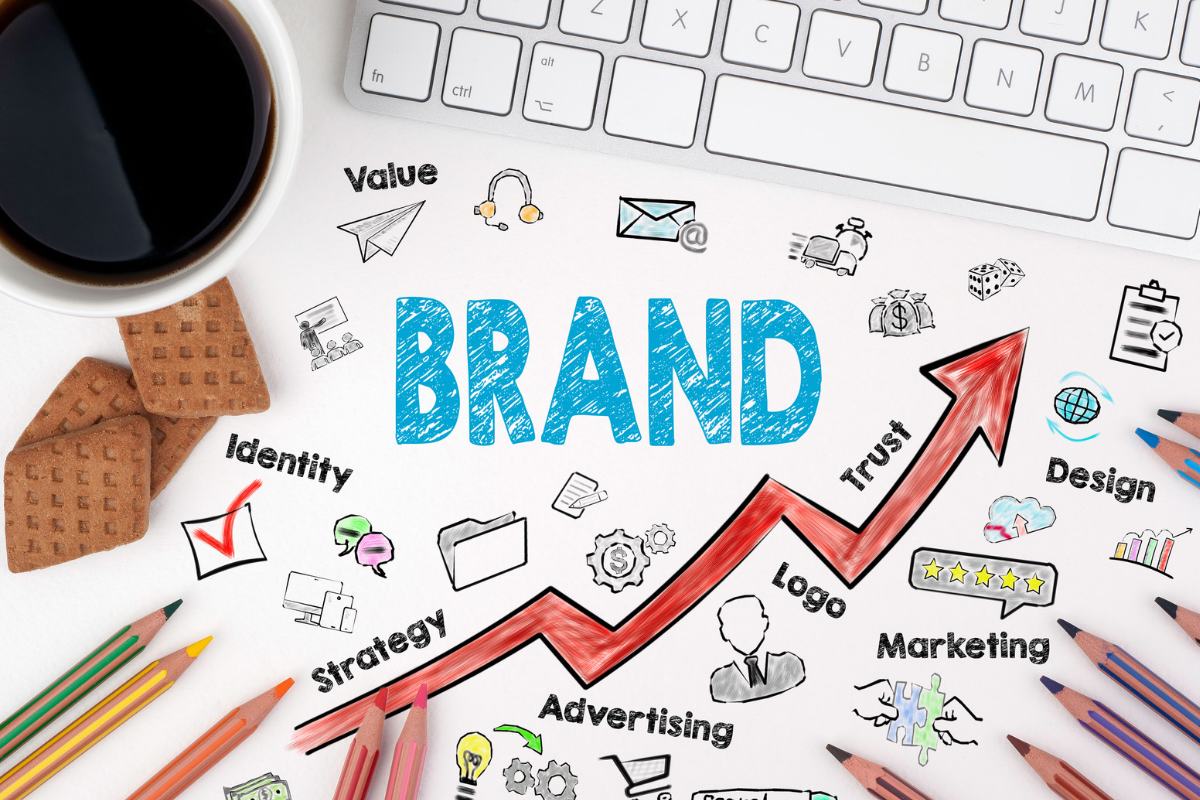
A strong brand strategy dictates your positioning, your core messaging, and your differentiation in the market. When this foundation is solid, every performance marketing dollar works harder. Here is why:
1. Brand Awareness Lowers Cost Per Click (CPC)
People click on names they recognize. It’s human nature. If your performance ad appears next to a competitor’s ad, but the user has already been exposed to your consistent brand messaging, they are significantly more likely to click yours. According to research by Nielsen, brand awareness is a primary driver of marketing ROI, often accounting for a substantial baseline of sales before a single performance ad is even served.
2. Consistent Messaging Increases Conversion Rates
Have you ever clicked an ad that promised one thing, only to land on a webpage that felt entirely different? That friction kills conversions.
A unified brand strategy ensures that the promise made in a performance ad matches the reality of the landing page, the product experience, and the customer service. This alignment builds trust, and trust is the ultimate conversion metric.
3. Long-Term Growth Requires Both Engines
The most effective marketing frameworks don’t choose between brand and performance; they balance them. The legendary marketing effectiveness researchers Les Binet and Peter Field have repeatedly proven that optimal marketing effectiveness usually requires a balance of brand building and sales activation. While the exact ratio varies by industry, their famous “60/40 rule” suggests that directing roughly 60% of budget to long-term brand building and 40% to short-term activation yields the best sustainable growth.
Brand strategy sets the stage, making your audience receptive, performance marketing then steps in to harvest that readiness. When you rely solely on performance, you are constantly forcing the engine to work at maximum capacity just to maintain the status quo.
Stop Renting Attention, Start Owning Real Estate

Performance marketing is like renting attention. The moment you stop paying Google or Meta, the traffic stops. Brand strategy, on the other hand, is like buying digital real estate. Over time, it compounds.
When your brand positioning is clear—when you know exactly who you are for, what problem you solve, and how you communicate that simply, your performance campaigns require less heavy lifting.
You don’t have to shout as loud or offer steep discounts to get people to pay attention, because they already know why you matter.
Conclusively,
If your performance ads are seeing diminishing returns, the answer usually isn’t just to tweak the bidding strategy or change the button color. The answer is often to zoom out and look at the brand.
Does your audience understand why you are different? Do they trust you? Is your messaging consistent from the very first ad to the final checkout page?
If your team is struggling to align these two vital functions, Adessi can help. We specialize in pulling that single, clear thread from customer insight all the way through to execution. Explore our brand strategy services or book a strategy call to see how we can help you build a brand that doesn’t just look good, but makes all of your marketing perform better.
Frequently Asked Questions
- Why do my ads get clicks but no sales?
You might be committing a “bait and switch.” If your ad gives off one thing but your website feels like a completely different, clunky company, people lose trust and immediately hit the back button. A strong brand strategy ensures the experience is seamless from click to checkout.
- How do I get my brand team and performance team to work together?
Start by getting them to agree on the same customer insight. Who are you actually for, and what hidden problem are you solving for them? Once you have that single, clear thread, your brand team can build the core messaging, and your performance team can use that exact same message to run highly effective, consistent ads.
- How do I stop losing customers to cheaper competitors?
Stop being a commodity. When you have a distinct brand position (like selling a “morning ritual” instead of just plain coffee beans), customers buy into the feeling. You won’t need a “20% off” banner to win the click.