

How Internal Behavior Shapes External Trust
If you walk into a restaurant that has a flawless Instagram presence and a menu that promises “farm-to-table tranquility”, but when you sit down, you can hear the head chef absolutely losing his mind at the line cooks, and your server looks like they haven’t blinked for days. Do you care about the “farm-to-table tranquility” anymore? Nope. The food could be incredible, but the vibe is ruined. You just want to pay for your sparkling water and leave.
That is exactly what happens when your brand’s internal behavior doesn’t match its external marketing.
Look, we can design the most gorgeous, high-converting campaigns in the world. But if the culture inside your building actively contradicts the story we’re telling the market, the whole thing falls apart.
Here is why your brand narrative actually succeeds or completely crashes internally before a customer ever sees it.
Your Customers Are Actually Your Second Audience
Let’s get one thing straight: your team gets the front-row seats to your brand story. They are the beta-testers of every promise you make.
If your marketing deck says, “We move fast and break things!” but your team needs three levels of managerial approval just to test a new email subject line, they are going to roll their eyes.

And truthfully, humans are terrible at hiding cognitive dissonance. If your team thinks your core values are just corporate fluff, they will eventually leak that skepticism to your customers. It sneaks out in exhausted customer support emails, robotic sales pitches, and uninspired creative work.
You can’t fake belief. When employees actually experience the brand values in their day-to-day work, they don’t have to read from a script. They just act like themselves. That’s when external trust goes through the roof.
When The Backstage Brawl Spills Over: A Case Study
What happens when internal behavior violently clashes with external storytelling? You don’t have to look far.
Take the infamous Wells Fargo scandal. Externally, their brand storytelling was wrapped in Americana, trust, and the slogan, “Together we’ll go far.” They positioned themselves as the friendly neighborhood bank dedicated to their customers’ financial well-being.
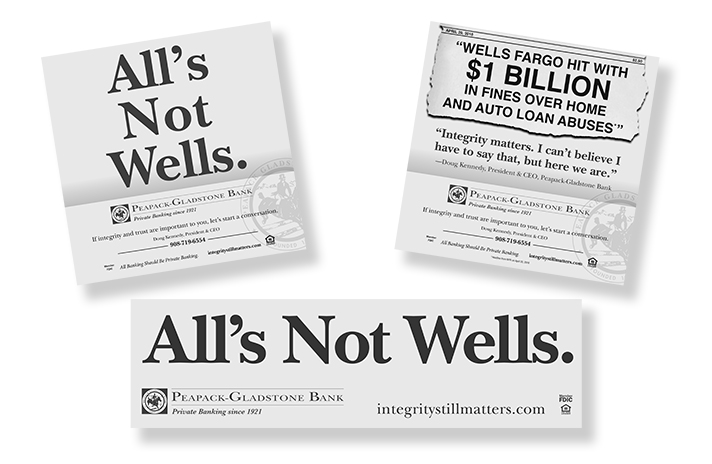
Internally, however, the behavior demanded by leadership was entirely different. Employees were subjected to brutal, unrealistic daily sales quotas. The internal culture operated on fear and extreme pressure. The result? Employees opened millions of unauthorized accounts just to survive the internal metrics.
When the truth came out, it didn’t just cause a PR crisis; it shattered decades of external trust overnight. The external brand story was “trust.” The internal behavior was “survival at all costs.” Behavior always wins.
We saw similar fractures with companies like Away Luggage. A few years ago, Away was the darling of the millennial travel scene. Their external brand was all about breezy, joyful travel, inclusion, and taking PTO to see the world. But internally? The Verge published a massive exposé revealing a brutal Slack culture where employees were publicly berated, overworked, and actively discouraged from taking time off.

The backlash was swift, and the CEO temporarily stepped down. The market didn’t just punish them for bad management, they punished them for their hypocrisy.
How to Bridge the Gap: Solutions for Modern Brands
You cannot out-market a broken internal culture. If you want your external brand storytelling to build unshakeable trust, you have to align the inside first. Here is how:
- Audit the Dissonance
Talk to your frontline workers, not just the C-suite. Ask one simple question: “What is the biggest roadblock preventing you from delivering on our brand promise today?” If your brand is “Fast,” but your internal approval process takes three weeks, you have identified the gap. - Align Your KPIs with Your Core Values
You get what you measure. If your brand story relies on “quality care,” but you only bonus employees based on “call volume and speed,” your internal systems are actively sabotaging your brand. Reward the behaviors that make your story true. - Turn Employees from Script-Readers into Storytellers
Give your team the agency to actually embody the brand. Ritz-Carlton doesn’t just tell its employees to be hospitable; it gives them a discretionary budget to solve guest problems on the spot without asking for managerial permission. That internal trust creates external magic.

Frequently Asked Questions
1. What is the difference between internal branding and external branding?
External branding is what the market sees (positioning, messaging, visuals, campaigns). Internal branding is how the brand is understood and applied inside the company (values in action, behavior standards, decision principles). Strong brands connect both.
2. What’s the role of brand strategy in aligning internal and external trust?
Brand strategy defines what you stand for, who you serve, and how you win then turns it into clear positioning, messaging, and principles. A good strategy avoids “aspirational claims” your company can’t support and builds a story that matches your delivery reality.
3. What are the most common internal behaviors that quietly destroy external trust?
We classify them as five:
- Overpromising in sales to hit targets
- Slow or blame-heavy problem resolution
- Inconsistent decision-making (“depends who you ask”)
- Risk-avoidant culture while marketing “innovation”
- Leaders bypassing the rules everyone else must follow
Build a Strategy Rooted in Reality
Before we design a single asset at Adessi or write a line of copy, we sit down with your leadership to hold up a mirror.
We help you find the sweet spot between what you want the market to believe and what your company can actually deliver. This way your brand doesn’t come off as a lying brand.
Book a brand strategy service or contact us for a consultation,