


Market research that actually informs strategy
Most “market research” fails for one simple reason: it answers interesting questions, not strategic ones. You learn a lot… and still don’t know what to do next.
A useful brand market research strategy doesn’t aim to collect more data, it aims to reduce uncertainty around a handful of decisions: who you’re for, what you’re promising, why you win, and what to say and do next.
This article would briefly show you how to run audience research and market analysis that directly feeds positioning and messaging fast. In 2025, 42% of startups failed because there is “no market need, that’s why this matters for your brand. You want to make sure your company doesn’t fall into this category.
STEP 1: Start with the decisions, not the methods
Before you run surveys, define the 3–5 decisions the research must unlock. For example;
- Your Positioning choice: What category do we want to be chosen in and which “lane” can we own?
- Audience focus: Which segment has urgent need, budget, and willingness to switch?
- Message priorities: Which outcomes and anxieties drive the purchase?
- Proof strategy: What evidence reduces perceived risk fastest?
- Channel fit: Where do people form opinions and seek validation?
If your research plan can’t point to these decisions, it would not yield results.
Step 2: Collect “decision-grade” customer insights (not opinions)

Start with interviews that mirror real buying moments
Do 8–12 interviews across:
- recent buyers (why now?)
- almost-bought prospects (why not?)
- churned customers (what broke trust?)
- power users (what keeps them?)
Use questions that force real tradeoffs:
- “What was happening the week you started looking?”
- “What would have made you delay this by 3 months?”
- “What did you compare us to?”
- “What felt risky about choosing us?”
- “What was the final ‘ok, let’s do it’ moment?”
- “If you had to explain us in one sentence, what would you say?”
Key rule: you’re not looking for compliments. You’re looking for the logic driving their decision.
Step 3: Do market analysis by “alternative,” not by competitor
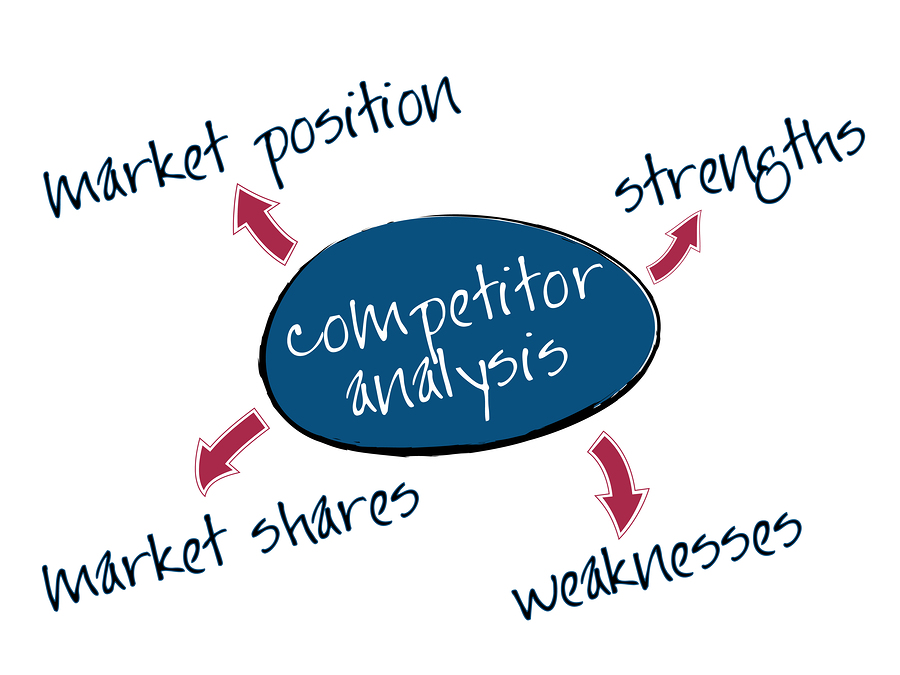
Classic competitor lists are limited. Buyers don’t compare you to “brands like you.” They compare you to whatever solves the problem.
Map alternatives like this:
- Do nothing (stay with the pain)
- DIY (spreadsheets, internal team, patchwork tools)
- Indirect (a different approach that still gets the job done)
- Direct competitors
This produces sharper positioning because you’ll see what you’re really up against: inertia, risk, and switching costs, not just features.
Step 4: Mine existing language (your best messaging research is already public)
Before you write new copy, pull phrases from:
- your reviews and competitor reviews
- Reddit threads, niche communities, YouTube comments
- sales call notes and objections
- support tickets (expectation gaps = gold)
- competitor homepages + FAQ pages
You’re looking for repeated:
- “I want…” outcomes
- “I’m worried…” fears
- “I need to be convinced…” internal approval barriers
- “Prove it…” evidence requests
This step makes messaging feel like the customer wrote it, which is usually why it converts.
Many companies invest heavily in insights but struggle to turn them into advantage because the data is widely available and execution is the differentiator.
Step 5: Use surveys to validate, not to discover
Surveys are great once you have hypotheses from interviews.
Use a short survey to quantify:
- top decision drivers (ranked)
- top hesitations (ranked)
- switching triggers (what changed?)
- proof preferences (what builds confidence?)
- segment differences (use case, company size, role)
Keep it tight. If it doesn’t change a decision, remove it.
What “good” research outputs look like (copy-and-strategy ready)
If your market research strategy is working, you should be able to produce:
- A segment you can actually target
Defined by urgency, job-to-be-done, and switching motivation (not age, gender, or industry alone). - A hesitation map
Where trust breaks: pricing ambiguity, unclear outcomes, fear of switching, lack of proof, internal politics. - A category sentence
“How buyers describe what this is” in their words. - A message hierarchy
Lead with 3–5 claims in the order buyers care about (not the order your team prefers). - A proof plan
What to show on the homepage, in ads, in sales, and in onboarding.
- A segment you can actually target
Frequently Asked Questions
What is a market research strategy?
A market research strategy is a structured approach to gathering and interpreting customer, market, and competitive data to support specific business decisions. Unlike exploratory research, it focuses on reducing uncertainty around positioning, messaging, audience focus, and proof not just collecting insights.
How much market research is actually enough?
You usually need less than you think. In many cases, 8–12 well‑run interviews plus targeted message and competitor analysis can uncover clearer insights than large, unfocused studies. The goal is clarity, not volume.
Can small teams run effective market research?
Yes. Strategic market research is more about focus than scale. Small teams can run lean research sprints by prioritizing decision‑critical questions and using existing data like sales calls, reviews, and support tickets.
When should market research be updated?
Research should be refreshed whenever you’re:
- entering a new market
- seeing stalled growth or declining conversion
- repositioning or changing your offer
- noticing increased objections or hesitation in sales
Market dynamics change faster than most brand strategies research should keep pace.

Market research becomes valuable only when it changes how your brand shows up in the market.
That’s the difference between research as a task and research as leverage.
At Adessi, we don’t run research to “see what comes up.” We run it to answer the questions that matter most to your business.
If your research hasn’t translated into clearer strategy, stronger messaging, or easier sales, we can help you bridge that gap.
Explore our Market Research & Brand Strategy services or book a discovery call to turn insight into action.