

Brand Identity vs Brand Image: What Most Businesses Get Wrong
If you’ve ever said, “this isn’t how we want to be perceived,” you’re already feeling the gap between brand identity and brand image.
One of the most common branding mistakes businesses make is assuming brand identity and brand image are the same thing. They’re related but they’re not interchangeable and confusing the two is often why brands feel “off,” inconsistent, or misunderstood in the market.
Let’s break down what each actually means, why the difference matters, and how to close the gap between who you think you are and how people experience you.
What is a Brand Identity?
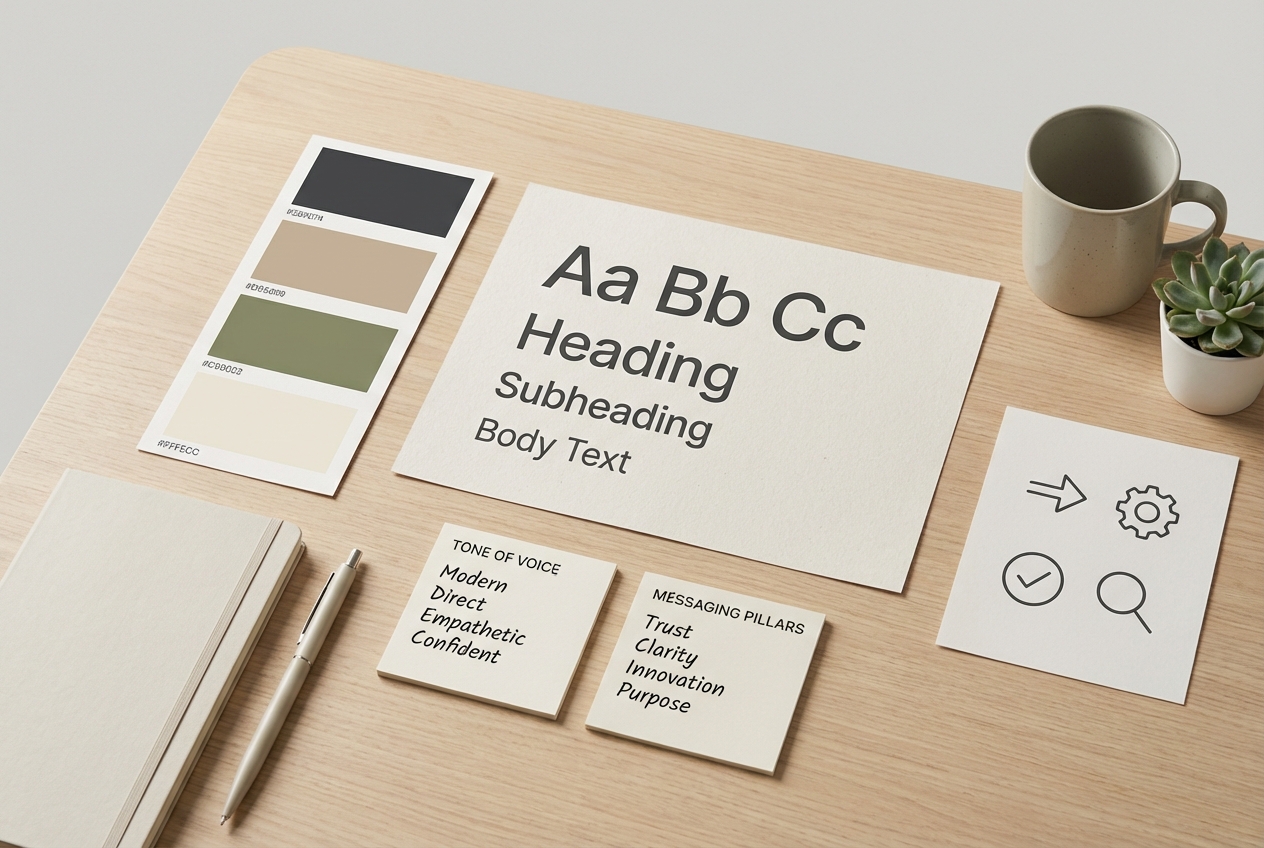
A brand identity is not just your logo or color palette. It’s the full internal framework that guides how your brand shows up everywhere.
This includes:
– Your purpose and positioning
– Your tone of voice and principles
– Your visual identity system
– Your behavior across channels (sales, support, social, product)
– The decisions you say “yes” and “no” to
Think of brand identity as the operating system of your brand. It’s what ensures consistency even when different people, teams, or platforms are involved.
This is where brand identity design plays a role. Good identity design makes strategy visible and repeatable.
What is a Brand Image?
A Brand image is how people interpret and remember your brand based on their experiences with it.
It’s shaped by:
– Your content and campaigns
– Word of mouth and reviews
– Product experience
– Customer support
– Cultural context and timing
– What competitors are doing
This is where brand perception lives, and perception is cumulative. People don’t judge your brand from a single touchpoint, they form opinions based on patterns.
That’s why brand image can drift even when your identity feels “clear” internally.
The Difference Between Brand Identity and Brand Image
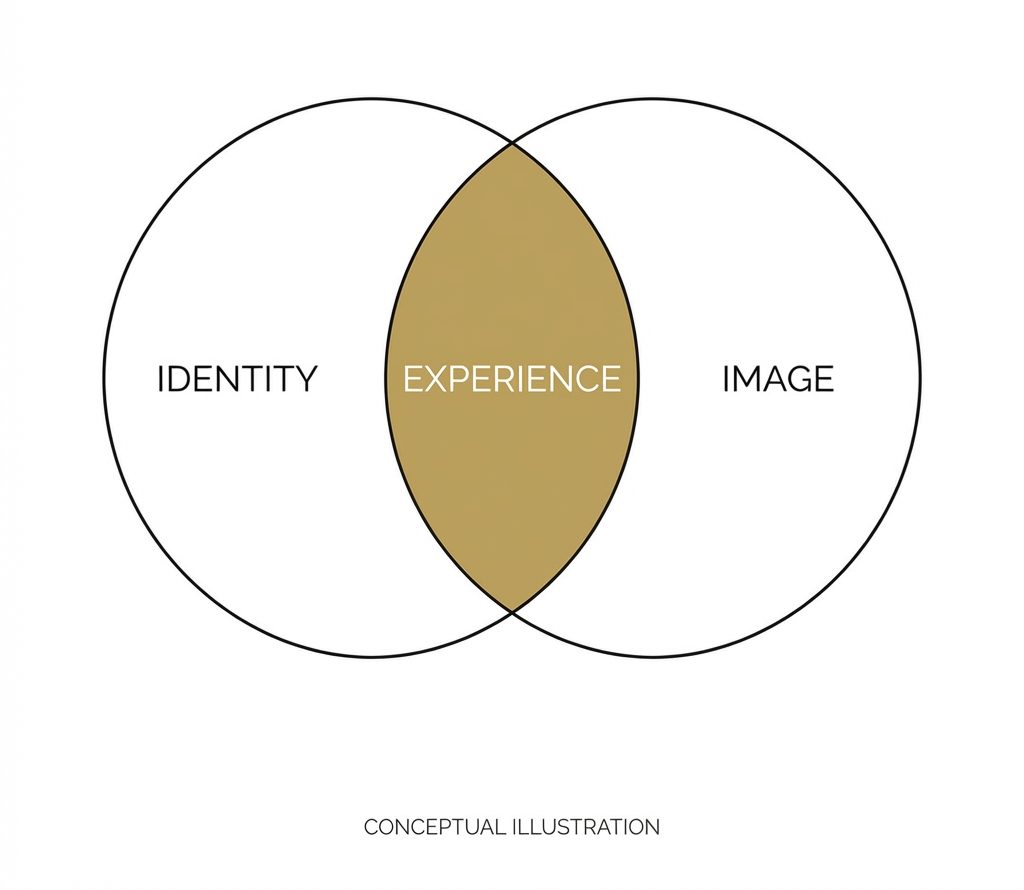
At its core, the difference is this:
– Brand identity is what you define.
– Brand image is what they perceive.
Brand identity is the intentional system you build: your positioning, values, voice, visuals, and behavioral rules. Brand image is the result of how all of that lands in the real world.
You control identity.
You influence image.
You never fully control perception.
That distinction is where most businesses go wrong.
DO NOT MAKE THIS MISTAKE: Treating Image as a Design Problem
When brand image doesn’t match expectations, many businesses react by redesigning.
New logo.
New website.
New fonts.
New tagline.
But the issue usually isn’t visual, it’s behavioral.
If your brand claims to be “human” but your support is slow and scripted, perception breaks. If you say you’re “premium” but discount constantly, image erodes.
Brand image problems are rarely fixed by surface changes alone. They’re fixed when identity is applied consistently through action.
Why Alignment Matters More Than Control

You can’t fully control a brand image but you can reduce the confusion around it.
Strong brands don’t try to micromanage perception. Instead, they focus on alignment:
– Identity is clearly defined
– Teams know how to apply it
– Decisions reinforce the same idea
– Experiences match the promise
When identity is clear and consistently expressed, brand image becomes more predictable. Not identical across everyone but directionally aligned.
This is where brand storytelling matters. Your story isn’t just what you say, it’s what people experience over time.
A Mini Case Study
Imagine a brand that positions itself as bold and challenger‑minded.
– The identity deck is sharp.
– The language is confident.
– The visuals are striking.
But:
– Social content plays it safe.
– Sales messaging sounds corporate.
– Product updates avoid risk.
The identity exists but it’s not being lived. So the brand image becomes muted, cautious, and forgettable. That gap is where trust leaks.
How to Close the Gap Between Identity and Image

If your brand image isn’t where you want it to be, start here:
- Re‑clarify your identity
Not just who you are, but how you behave. What should people consistently experience?
- Audit real touchpoints
Look at how your brand shows up in practice, not just in decks. Website, ads, onboarding, support, social.
- Fix behavior before visuals
If actions don’t match the story, no amount of design will fix perception.
- Build systems, not slogans
Make identity usable. Give teams rules they can apply, not just words to repeat.
This is where brand strategy becomes operational not theoretical.
Frequently Asked Questions
- What causes the biggest gap between identity and brand perception?
It’s usually one of these:
– Mixed signals (premium positioning mixed with constant discounting)
– Inconsistent voice (social sounds fun, sales sounds stiff)
– Experience mismatch (promise speed, deliver delays)
– Unclear category (people can’t explain what you do quickly)
2. How do I measure brand image (brand perception)?
Use a mix of qualitative + quantitative signals, I.e
– Customer interviews (why they chose you / why they hesitate)
– Reviews and support tickets (language patterns)
– Win/loss notes from sales
– Brand search trends and direct traffic
– Referral rate and repeat purchases
In Essence?
The real issue in the brand identity vs brand image conversation isn’t misunderstanding the definitions, it’s assuming one automatically creates the other.
Brand identity is your intent. Brand image is the outcome. When identity is clear, lived, and repeated, brand image follows. When it isn’t, perception fills the gaps and rarely in your favor.
Strong brands don’t obsess over how they look. They focus on how they show up. And that’s what people remember.
Adessi helps businesses define brand identity systems that teams can actually use, so your message stays consistent, your experience matches the promise, and your brand image improves over time.
Book a brand clarity call or explore our Brand Identity & Positioning services to get started.