

How Brand Purpose Drives Long‑Term Growth
Brand purpose has been overused and misunderstood.
Some companies treat it like a slogan. Others treat it like a CSR initiative that lives on a slide somewhere. Neither approach leads to growth.
Real brand purpose is about making decisions easier, internally and externally. When defined clearly and applied consistently, purpose becomes a strategic asset that compounds over time, shaping trust, loyalty, and ultimately long‑term brand growth.
This article breaks down what brand purpose actually is, why it works, and how it drives growth without becoming performative.
Before you continue, check out real time examples of brand purpose being actualized.
Now, you can continue.
What Does Brand Purpose Mean?
Brand purpose is the reason your brand exists beyond making money but it’s not vague idealism. It’s a practical lens for decision‑making.
A strong purpose answers three questions:
- What problem are we committed to solving?
- For whom does this problem matter most?
- What belief guides how we solve it?
Purpose is not:
– a mission statement no one uses
– a list of values disconnected from behavior
– a cause you attach during campaigns
Purpose works when it shapes how you build products, communicate, hire, price, and respond when things go wrong.
That’s why purpose-driven branding isn’t a marketing trend, it’s an operating principle.
Why brand purpose drives long‑term growth

Short‑term growth comes from visibility. Long‑term growth comes from trust.
And trust is built when people can predict how a brand will behave.
If 81% of consumers say they need to trust a brand before they buy from it, then brand purpose creates that trust by doing something critical: making your brand legible. People understand what you stand for and what to expect.
This leads to:
– higher retention (customers stay longer)
– stronger preference (people choose you again)
– reduced price sensitivity (less reliance on discounting)
– easier word‑of‑mouth (people know how to describe you)
The connection between purpose and brand values
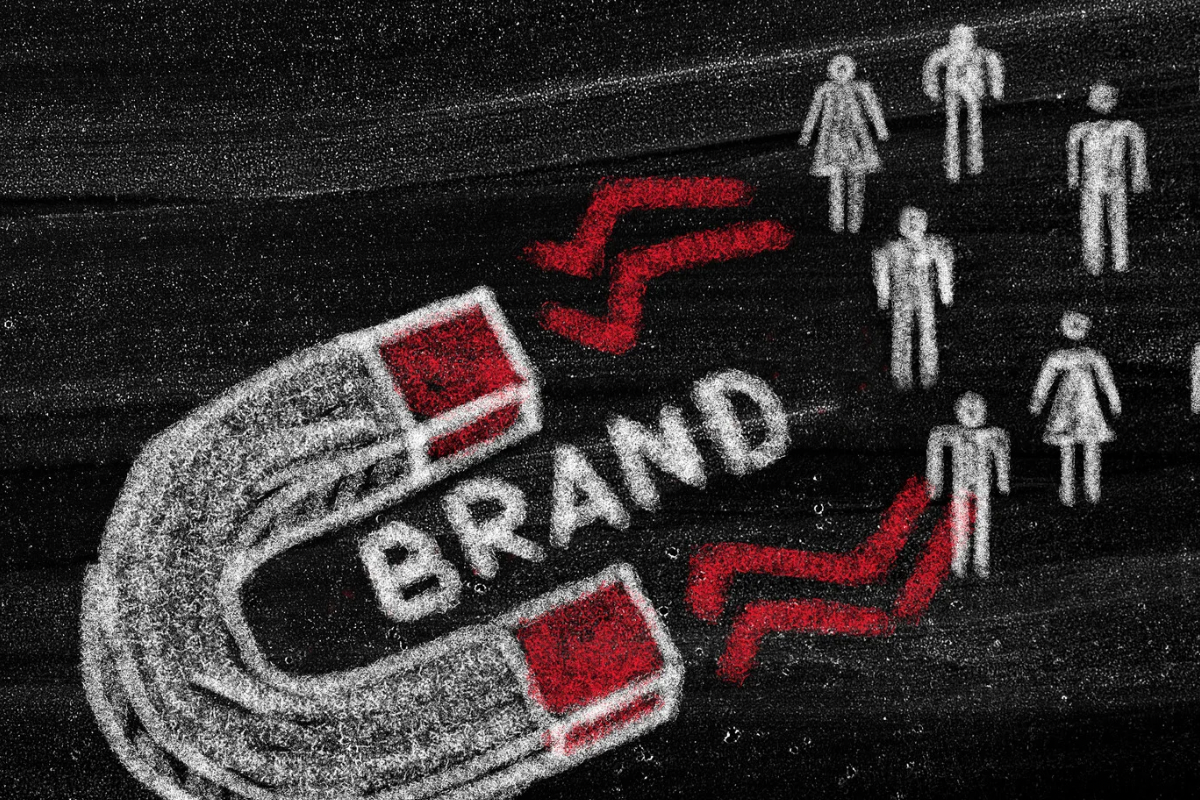
Brand values are how purpose shows up in action.
If purpose is the “why,” values are the behavioral guardrails that translate it into reality:
– how you speak to customers
– how you design experiences
– how you respond to criticism
– what you prioritize under pressure
When purpose and values align, consistency follows. When they don’t, credibility gets lost.
This is why many brands struggle with purpose‑driven branding: they articulate beliefs but don’t operationalize them and customers notice the gap.
Purpose as a tool for decision making (not a message)
The most effective purpose‑driven brands don’t talk about purpose constantly. They use it quietly to make better choices.
Purpose acts as a filter:
– What markets do we enter?
– What partnerships make sense?
– What features do we build or not build?
– How do we balance growth with trust?
A well‑defined purpose reduces internal friction. Teams don’t need to debate every decision because there’s a shared belief guiding tradeoffs.
This is where brand purpose becomes a growth lever not a branding exercise.
What the data says about purpose‑driven brands

Purpose works when it’s credible and consistent.
– Kantar’s BrandZ analysis shows that brands seen as “meaningfully different” grow faster than competitors, with purpose being a key driver of perceived difference.
– Harvard Business Review: found that companies with strong purpose alignment outperform peers in long‑term financial performance when purpose is embedded into strategy, not treated as marketing.
Common mistakes that weaken brand purpose (and stall growth)
- Abstract language
If your purpose could belong to any brand, it belongs to none.
- Campaign‑only activation
Purpose shows up during launches, then disappears in daily operations.
- Misaligned experiences
Claims don’t match onboarding, support, or product behavior.
- Over‑moralizing
Brands don’t need to lecture. They need to be consistent.
These mistakes don’t just neutralize purpose, they create skepticism.
How purpose supports digital brand storytelling
Purpose is the backbone of your narrative.
It gives your story:
– a point of view
– a reason for existing
– a thread that connects past, present, and future
Without purpose, storytelling becomes content production. With purpose, storytelling becomes meaning‑building.
This is why purpose fits directly into your broader brand system.
In conclusion, purpose is how brands grow without chasing
Brand purpose doesn’t drive growth by being inspirational. It drives growth by being useful.
When purpose informs positioning, values, and behavior, it creates coherence. And coherence builds trust. Trust builds loyalty. Loyalty builds long‑term brand growth.
Frequently Asked Questions
What’s the difference between brand purpose and brand values?
Brand purpose explains why your brand exists and the change it’s committed to creating. Brand values explain how that purpose shows up in behavior, how decisions are made, how customers are treated, and what standards guide action. Purpose sets direction; values guide execution.
Do purpose‑driven brands have to take public stances?
No. Purpose doesn’t require public activism. It requires internal consistency. Many effective purpose‑driven brands express their beliefs through product decisions, experience design, or customer policies rather than public statements.
Can brand purpose change over time?
The expression of purpose can evolve, but the core belief should remain stable. Frequent shifts signal uncertainty and weaken trust. Strong brands reinterpret purpose for new contexts without abandoning it.
How does brand purpose influence digital branding specifically?
In digital environments, brands are experienced in fragments. Purpose acts as the connective tissue across platforms ensuring tone, behavior, and messaging feel coherent even when formats and contexts change.
How Adessi Helps k
If your brand purpose feels vague, underused, or disconnected from growth, we can help you make it practical.
Adessi helps build your brand, define and operationalize your purpose so it actually guides strategy not just storytelling.
We work with teams to:
– clarify purpose and brand values
– translate belief into positioning and narrative
– align messaging and experience across platforms
– build systems that scale without losing meaning
Explore our Brand Strategy & Storytelling services or book a discovery call to turn purpose into long‑term advantage.